
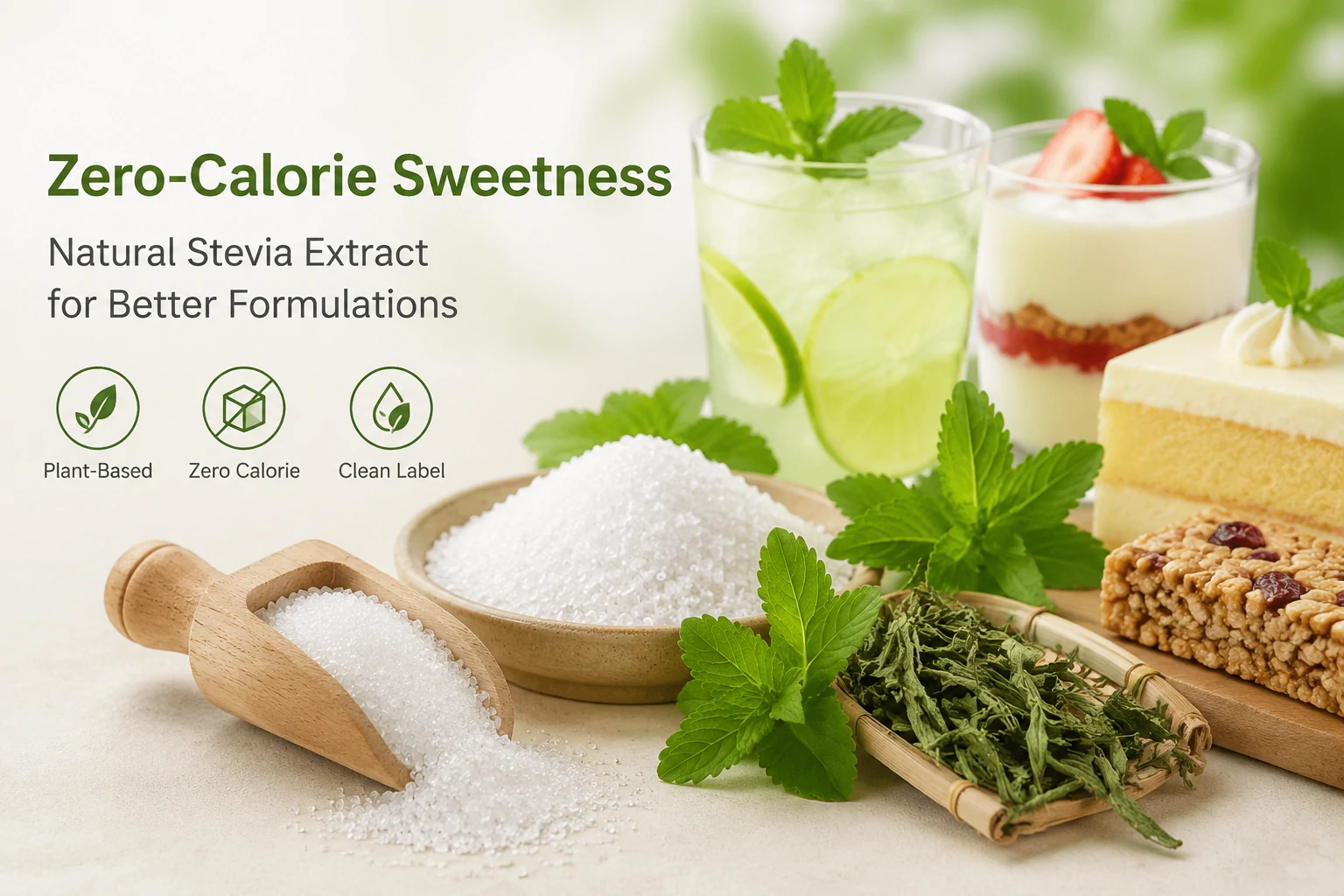
Sugar reduction sounds simple until the first bench sample comes back. The drink is sweet enough, but the fruit note feels thin. The yogurt meets the nutrition target, but the finish is sharper than the control. The protein bar looks good on paper, then tastes flat after the second bite. This is the everyday work behind a lower-sugar product, and it is where natural, zero-calorie stevia extract earns attention.
For manufacturers, stevia extract is not a magic switch. It is a powerful sweetening tool that has to be matched with the product matrix, processing method, label plan, and cost target. Used well, it can help a brand build new beverages, dairy products, bakery items, confectionery, and wellness formats without leaning so heavily on sucrose.
A useful stevia discussion begins with the sample in front of the R&D team. What changed after sugar was removed? Did the body disappear? Did acidity become louder? Did the sweetness arrive too late? Did the aftertaste stay longer than the flavor?
Those details matter more than a generic question like which stevia is best. A team evaluating H2-Via Stevia Extract should describe the actual product problem first. The grade, dosage, and blend route become much easier to narrow down after that.
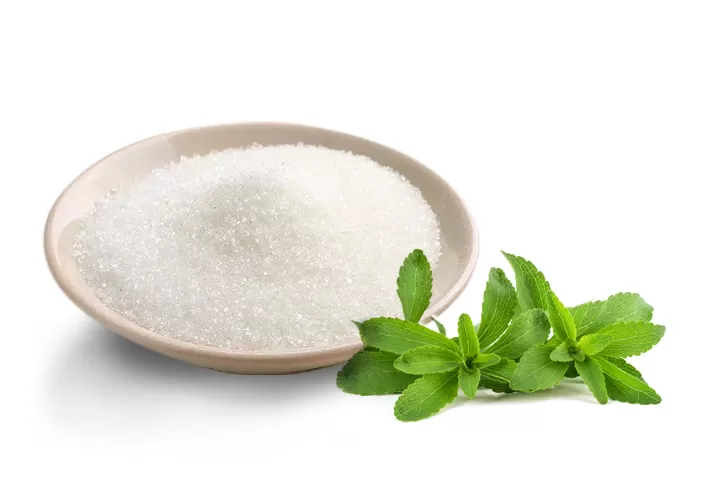
Stevia extract can bring strong sweetness at a very low use level. It can help reduce added sugar, lower calorie contribution from sucrose, and support a natural sweetener story. That makes it useful for brands under pressure to improve nutrition panels without making products feel like punishment.
Still, sugar has jobs that sweetness alone cannot cover. It gives body to drinks, texture to baked goods, chew to bars, and browning to some heated systems. When a formula needs those physical effects, stevia should be part of a wider sugar-reduction plan rather than the only ingredient change.
| Development Need | Where Stevia Helps | What May Need Extra Work |
|---|---|---|
| Lower sugar load | Supplies high sweetness without adding sucrose. | Nutrition claims still need formula and market review. |
| Natural sweetener positioning | Fits products built around plant-derived sweetening. | Flavor and label language should stay believable. |
| Cleaner calorie profile | Supports low-calorie and zero-calorie sweetener systems. | Bulk, body, and serving size still affect the final product. |
| Smaller ingredient dosage | Works at low inclusion levels, useful for compact formats. | Uniform blending matters in powders, tablets, and mixes. |
| Taste improvement | The right glycoside profile can reduce harshness. | Some formulas still need masking, acids, flavors, or companion sweeteners. |
In a beverage, there is nowhere for a sweetener mistake to hide. Water, tea, fruit acids, minerals, carbonation, and botanical flavors all expose the sweetness curve. A reduced-sugar tea may need bitterness control. A flavored water may need a quick, clean finish. A sports drink may need both sweetness and a mouthfeel that does not seem empty.
That is why beverage applications are often the best first test for stevia grade selection. If the material performs in a delicate drink, the team gets useful information about onset, linger, solubility, and flavor carry.
Dairy, bakery, and confectionery do not behave like water-based drinks. In dairy products, sweetness has to sit beside protein, fat, acidity, fermentation notes, and sometimes fruit prep. In baking applications, the sweetener may pass the taste test but still leave the cookie too pale or the cake too dry.
Candy and confectionery bring their own issues: release time, cooling effect, crystallization, chew, and flavor carry. In these systems, stevia helps with sweetness. The rest of the formula has to rebuild the eating experience.
| Product Format | First Thing To Check | Common Adjustment |
|---|---|---|
| Flavored water and tea | Sweetness onset, aftertaste, tea bitterness, acid balance. | Try a different steviol glycoside profile or blend with monk fruit. |
| Carbonated drinks | Carbonation bite, flavor lift, shelf stability. | Retune acid, flavor, and sweetener dosage together. |
| Yogurt and dairy drinks | Sourness, protein notes, body, fruit balance. | Use flavor masking, texture support, or a rounder sweetener blend. |
| Bakery and bars | Bulk, moisture, browning, bite. | Pair stevia with fibers, polyols, allulose, or other bulking systems. |
| Lozenges and candies | Sweetness release, cooling, crystallization. | Adjust carrier system and sweetener blend ratio. |
Buyers often ask for a percentage first. That is understandable, but it can send the conversation in the wrong direction. Reb A, Reb M, stevioside-rich grades, and total steviol glycoside profiles do not taste the same in every product.
HuachengBio lists stevia specifications including RA 50 percent to 99 percent and RM 95 percent. The useful question is not simply which number is highest. The useful question is which material gives the closest match to the target product at the lowest cost-in-use, with the least masking and the most stable supply plan.
If a formula tastes thin after sucrose removal, adding more stevia usually does not fix it. More sweetness can even make the gap feel larger. Body, bulk, browning, and chew need other tools.
A complete sugar reduction solution may include erythritol, allulose, fiber, flavors, or monk fruit extract alongside stevia. Monk fruit can round the sweetness curve in some products, while bulking ingredients rebuild the physical part of the eating or drinking experience.
A serious stevia brief should include the product type, flavor system, current sugar level, target sugar reduction, process conditions, pH, heat treatment, target market, documentation needs, and launch timing. Without those details, the supplier can only guess.
This is where HuachengBio's wider natural sweetener and plant extract portfolio is useful. A project may begin with stevia, then compare monk fruit extract, a monk fruit blend sweetener, sweet tea extract, or a custom reduction route before the team settles on a commercial formula.
It is easy to treat paperwork as a purchasing step, but late documentation issues can slow down a launch after the product already tastes right. Buyers should connect the approved sample with the specification, COA, SDS, allergen statement, non-GMO information, microbial limits, heavy metal limits, and certification needs.
HuachengBio's quality assurance and QC framework gives procurement and R&D a way to review the material beyond sensory fit. For larger projects, the company's integrated industry chain and manufacturing background can also support supplier qualification.
| Checkpoint | What To Confirm |
|---|---|
| Sensory match | The selected grade or blend still works in the final product matrix. |
| Process fit | Sweetness and flavor hold through heat, pH, mixing, storage, and packaging. |
| Specification | Assay, particle size, appearance, limits, and test methods match the approved sample. |
| Documentation | COA, SDS, allergen, microbiology, heavy metal, non-GMO, Kosher, Halal, or ISO-related files are ready as needed. |
| Commercial fit | Lead time, MOQ, cost-in-use, and batch consistency fit the launch plan. |
Share your product category, sugar target, flavor system, process conditions, target market, and documentation needs with HuachengBio. The team can help compare H2-Via Stevia Extract with monk fruit extract, blend sweeteners, and broader sugar-reduction options before pilot testing.
Request stevia samples and formulation supportIt can restore sweetness at low use levels while helping brands reduce reliance on sucrose and support natural sweetener positioning.
It can replace sweetness, but sugar also affects body, browning, moisture, texture, and chew. Many products need a blend or texture system.
The choice should be based on taste in the finished product, glycoside profile, cost-in-use, documentation, regulatory fit, and bulk supply reliability.
Stevia can be tested in beverages, dairy products, bakery, confectionery, drink mixes, tabletop sweeteners, and nutritional products.
Include product matrix, target sweetness, sugar reduction goal, processing method, pH, flavor system, market destination, and required documents.
Stevia extract can open new formulation space, but the best results come when sweetness, texture, processing, labeling, and supply are handled as one project.







 EN
EN EN
EN CN
CN ES
ES PT
PT SV
SV DE
DE TR
TR FR
FR AR
AR BG
BG HR
HR CS
CS DA
DA NL
NL FI
FI EL
EL HI
HI IT
IT JA
JA KO
KO NO
NO PL
PL RO
RO RU
RU CA
CA TL
TL IW
IW ID
ID LV
LV LT
LT SR
SR SK
SK SL
SL UK
UK VI
VI SQ
SQ ET
ET GL
GL HU
HU MT
MT TH
TH FA
FA AF
AF MS
MS GA
GA BE
BE UZ
UZ