
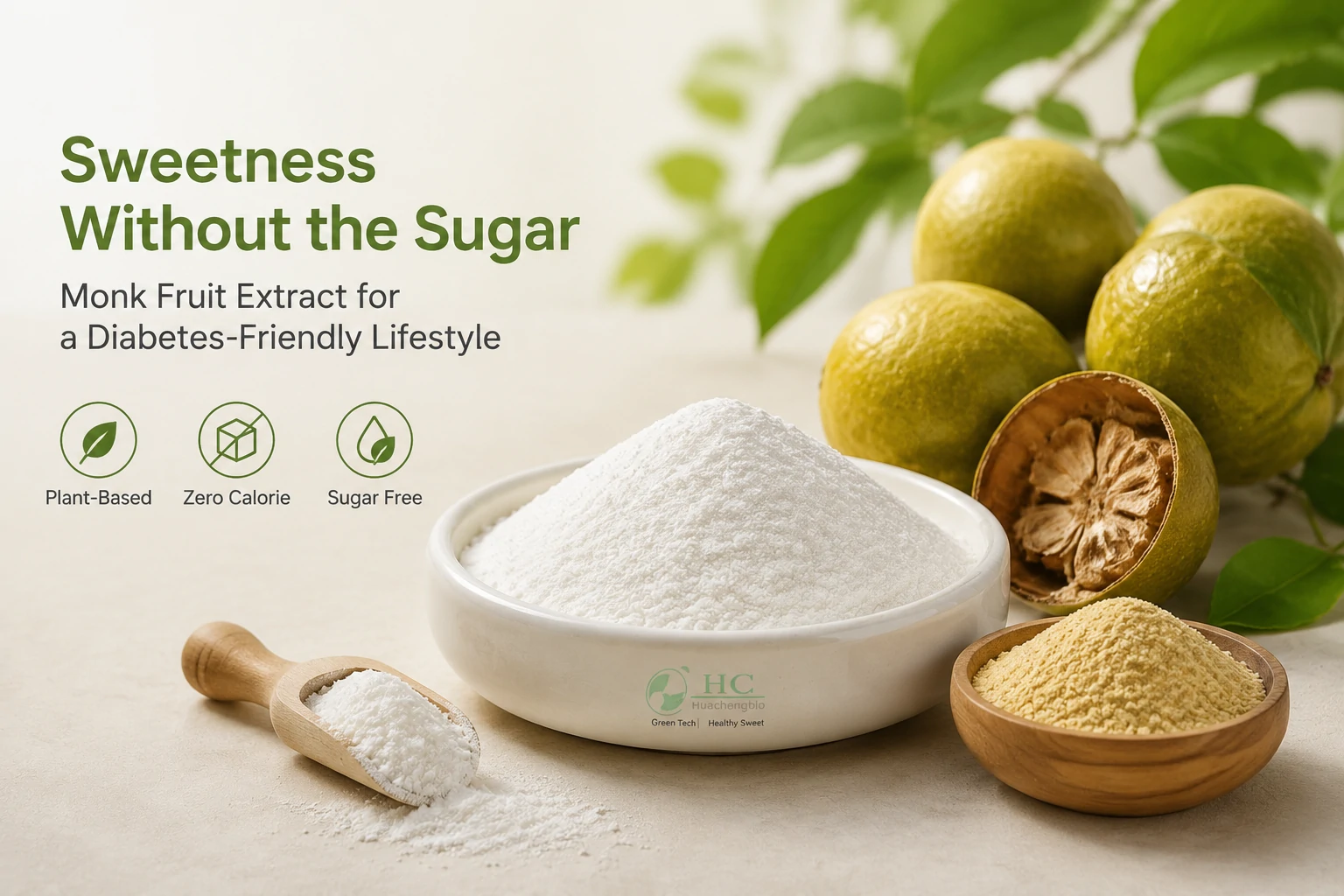
For anyone trying to reduce sugar, sucrose is more than a sweet ingredient. It is the number people check on a label, the reason a drink gets skipped, and the thing a product developer has to replace without making the food taste like a compromise.
Huachengbio's monk fruit extract gives brands a practical way to keep sweetness while reducing dependence on sucrose. It is not a diabetes treatment, and it should never be written that way. Its value is more straightforward: it helps food and beverage teams build lower-sugar products that still feel enjoyable enough for everyday use.
Sucrose is convenient. It tastes familiar, dissolves easily, adds body, helps texture, and supports browning in some foods. That is why removing it can make a product feel unfinished, even when the nutrition panel looks better.
For diabetes-friendly and sugar-conscious product lines, the work is more careful than a simple swap. The final product still needs clear labeling, realistic serving guidance, and a taste profile that people will actually choose again. Monk fruit extract can help because it separates much of the sweetness from the sucrose load.
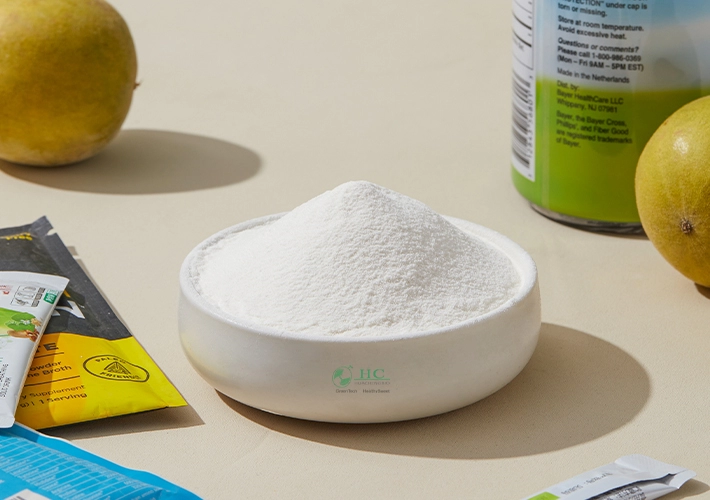
Monk fruit, also called luo han guo or Siraitia grosvenorii, gets its sweetness from mogrosides. Mogroside V is often used as the main marker in commercial extracts. These compounds are intensely sweet, so only a small amount is needed in many applications.
With H2-Luo Monk Fruit Extract, a brand can reduce or remove sucrose sweetness in drinks, dairy products, candies, tabletop sweeteners, drink mixes, and nutritional products. The finished claim still depends on the whole formula, but the sweetening route becomes much more flexible.
| Product Question | Why It Comes Up | How Monk Fruit Extract Helps |
|---|---|---|
| Will the product still taste sweet? | Sugar reduction often leaves a flat first impression. | Mogrosides provide strong sweetness at low dosage. |
| Can the nutrition panel improve? | Brands may need less added sugar or lower sucrose contribution. | Monk fruit extract sweetens without acting as sucrose. |
| Will consumers trust the label? | Many sugar-conscious shoppers look for familiar natural sweetener stories. | Monk fruit has a plant-derived positioning that fits clean-label concepts. |
| Will the formula still need body? | Sucrose also affects mouthfeel, texture, and solids. | Monk fruit handles sweetness, while other ingredients can rebuild bulk. |
| Can purchasing qualify the material? | Low dosage ingredients still need tight control. | Assay, COA, microbiology, heavy metal limits, and certifications support approval. |
This is the section that deserves the most caution. A monk fruit sweetened product may suit a sugar-conscious lifestyle, but it should not claim to treat, prevent, cure, or control diabetes. People with diabetes still need to consider total carbohydrates, serving size, other sweeteners, fiber, fat, protein, and medical advice.
For brand teams, safer wording usually focuses on the product design: reduced sugar, no sucrose added, zero sugar sweetener, low calorie sweetener system, or sugar-conscious lifestyle support where local rules allow. The claim should be backed by the formula, not by enthusiasm.
A lower-sugar product can win the first purchase because of the label. The second purchase usually comes from taste. Monk fruit has its own sweetness curve, so developers should test more than whether a sample is sweet enough.
The real questions are specific. Does the sweetness arrive too fast or too late? Does it linger after the fruit note fades? Does cocoa become dry? Does a yogurt seem more sour? Does a powdered drink mix stay even from scoop to scoop?
| Format | What Can Go Wrong | What To Adjust |
|---|---|---|
| Ready-to-drink teas and flavored waters | Thin body, sharper acid, lingering sweetness. | Rebalance acid, flavor, dosage, and sweetener blend. |
| Dairy and plant-based dairy | Sourness, protein notes, or weak fruit character. | Test fat level, flavor masking, and blend ratios. |
| Candy and lozenges | Sweetness release does not match the eating time. | Adjust bulking system, carrier, and sweetener timing. |
| Bakery and snack bars | Loss of bulk, bite, moisture, or browning. | Use fibers, polyols, allulose, or other texture builders. |
| Drink mixes and supplements | Uneven sweetness or slow dissolution. | Check particle behavior, blending uniformity, and serving-size accuracy. |
Monk fruit extract works especially well in products where sweetness is expected but sugar reduction is part of the purchase reason. That includes flavored waters, teas, powdered drinks, dairy beverages, yogurts, tabletop sweeteners, sugar-free candies, lozenges, and nutrition products.
Some projects need pure extract. Others are easier with a monk fruit blend sweetener, especially when the finished product needs more familiar handling, better bulk, or a more sugar-like usage format.
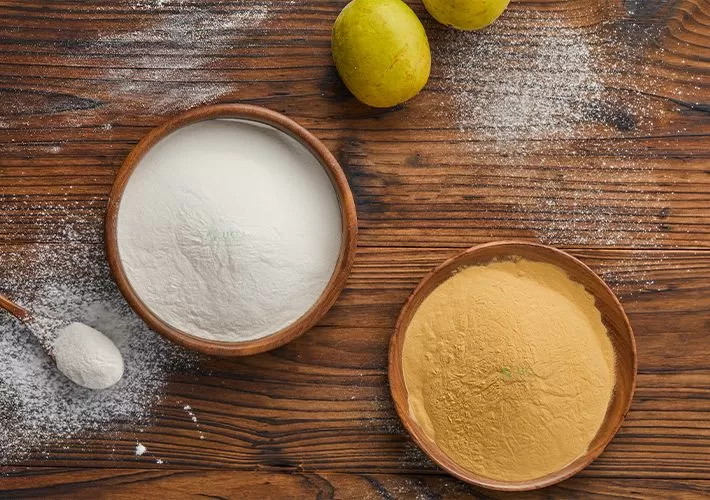
Huachengbio's monk fruit extract range covers Mogroside V 1.5 percent to 98 percent. That range gives developers options, but it can also tempt teams to shop by percentage alone.
A high Mogroside V grade may be right for one formula and unnecessary for another. Color, taste profile, dosage accuracy, cost-in-use, label plan, and supply expectations all belong in the same decision. A good sample request should explain the target product, not only ask for the highest purity available.
| Question | Why It Matters |
|---|---|
| How much sucrose is being removed? | Partial reduction and sugar-free concepts may need different sweetener systems. |
| What is the product matrix? | Acidic drinks, dairy, dry mixes, candies, and baked goods expose different taste issues. |
| What is the main sensory gap? | The formula may need sweetness, body, flavor rounding, or masking. |
| Which documents will customers request? | COA, specification, microbiology, heavy metals, allergen, non-GMO, Kosher, and Halal files may be needed. |
| What is the cost target per serving? | Cost-in-use is usually more meaningful than price per kilogram. |
Because monk fruit extract is used in small amounts, teams sometimes assume quality risk is small too. In practice, a tiny change in sweetness profile can show up quickly in a beverage or tabletop sweetener. A document gap can also slow approval after R&D has already finished the taste work.
Buyers should connect sensory approval with batch controls. Huachengbio's quality assurance and QC framework supports that review through food safety management, testing, third-party cooperation, and certifications listed in the company's quality materials.
One reduced-sugar product line may need several routes. A drink mix may need monk fruit extract for a compact sweetness system. A tabletop product may need a blend. A dairy concept may benefit from stevia and monk fruit together. A candy may need bulk and release control before the sweetness even feels right.
Huachengbio's natural sweetener and plant extract portfolio lets teams compare monk fruit extract, monk fruit blend sweeteners, stevia extract, concentrated juice, sweet tea extract, and other sugar-reduction options. For supply review, buyers can also look at the company's integrated industry chain and manufacturing background.
The strongest diabetes-friendly products do not feel like they are scolding the consumer. They give people a better option: a sweet tea with less sucrose, a yogurt with a more manageable sugar profile, a lozenge or drink mix that fits a sugar-conscious routine.
Monk fruit extract helps brands work in that middle ground. It keeps sweetness in the conversation while reducing the pressure to rely on sucrose. The rest still comes down to honest claims, careful formulation, and a supplier that can support the product beyond the first sample.
Share your product format, sugar reduction target, sweetness benchmark, processing conditions, market destination, and documentation needs with Huachengbio. The team can help evaluate H2-Luo Monk Fruit Extract, monk fruit blend sweeteners, stevia options, and broader sugar-reduction systems before pilot testing.
Request monk fruit samples and formulation supportYes, it can help reduce reliance on sucrose in foods and beverages. The final claim depends on the complete formula, total carbohydrates, serving size, and local labeling rules.
No. It is a sweetener ingredient, not a treatment. People with diabetes should follow professional dietary and medical advice.
Sucrose adds digestible carbohydrate and calories. Monk fruit extract provides intense sweetness at low use levels without acting as sucrose.
Not always. It replaces sweetness, but many foods also need bulk, browning, body, moisture, or texture support.
Ask for samples, Mogroside V specification, COA, test method, microbiological limits, heavy metal limits, allergen and non-GMO information, relevant certifications, and application guidance.
Monk fruit extract is useful when it helps brands lower sucrose without making sweetness feel like a sacrifice, and when the finished product keeps its claims honest.







 EN
EN EN
EN CN
CN ES
ES PT
PT SV
SV DE
DE TR
TR FR
FR AR
AR BG
BG HR
HR CS
CS DA
DA NL
NL FI
FI EL
EL HI
HI IT
IT JA
JA KO
KO NO
NO PL
PL RO
RO RU
RU CA
CA TL
TL IW
IW ID
ID LV
LV LT
LT SR
SR SK
SK SL
SL UK
UK VI
VI SQ
SQ ET
ET GL
GL HU
HU MT
MT TH
TH FA
FA AF
AF MS
MS GA
GA BE
BE UZ
UZ